
Why Am I Hitting My Irons Fat and Thin? Try This Simple Drill
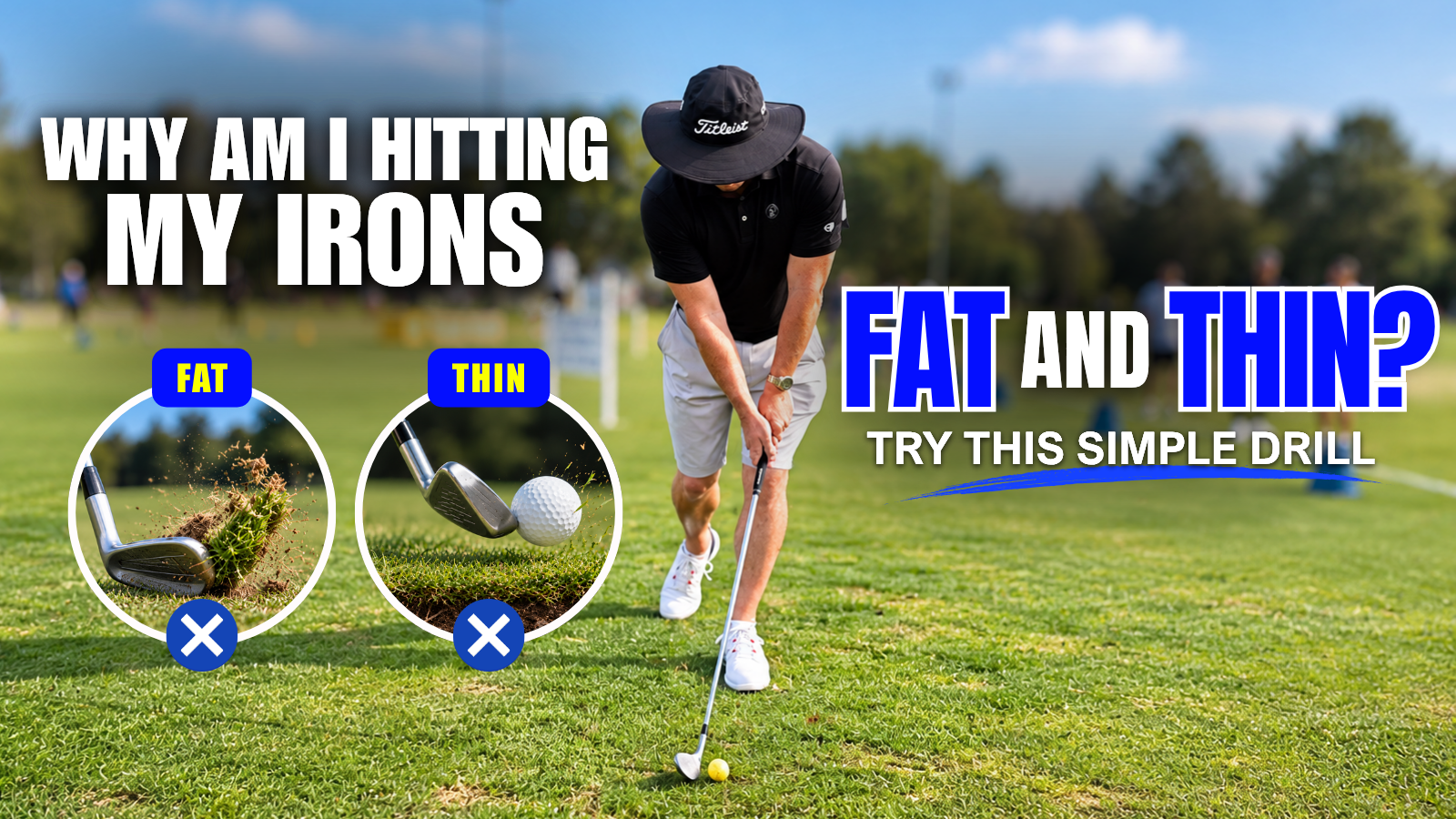
Are you fat on one iron shot, thin on the next, then topping the following one?
And you don't know what the hell is going on with any shot you hit off the ground?
If that's you, there can be a number of reasons for inconsistent iron contact, but one problem I often see is swaying during the golf swing, particularly with the hips.
The drill I'm going to show you is simple, but it's not easy. With enough practice over the coming weeks and months, I'm looking to help you improve your ball striking, balance and ability to rotate rather than sway.
Why Can Swaying Cause Fat and Thin Shots?
Think about your golf swing like a pendulum.
If the fulcrum point of the pendulum stays still, the bottom of the swing comes back to roughly the same point. But if that point starts moving around, you can have all sorts of problems with where the bottom of the swing occurs.
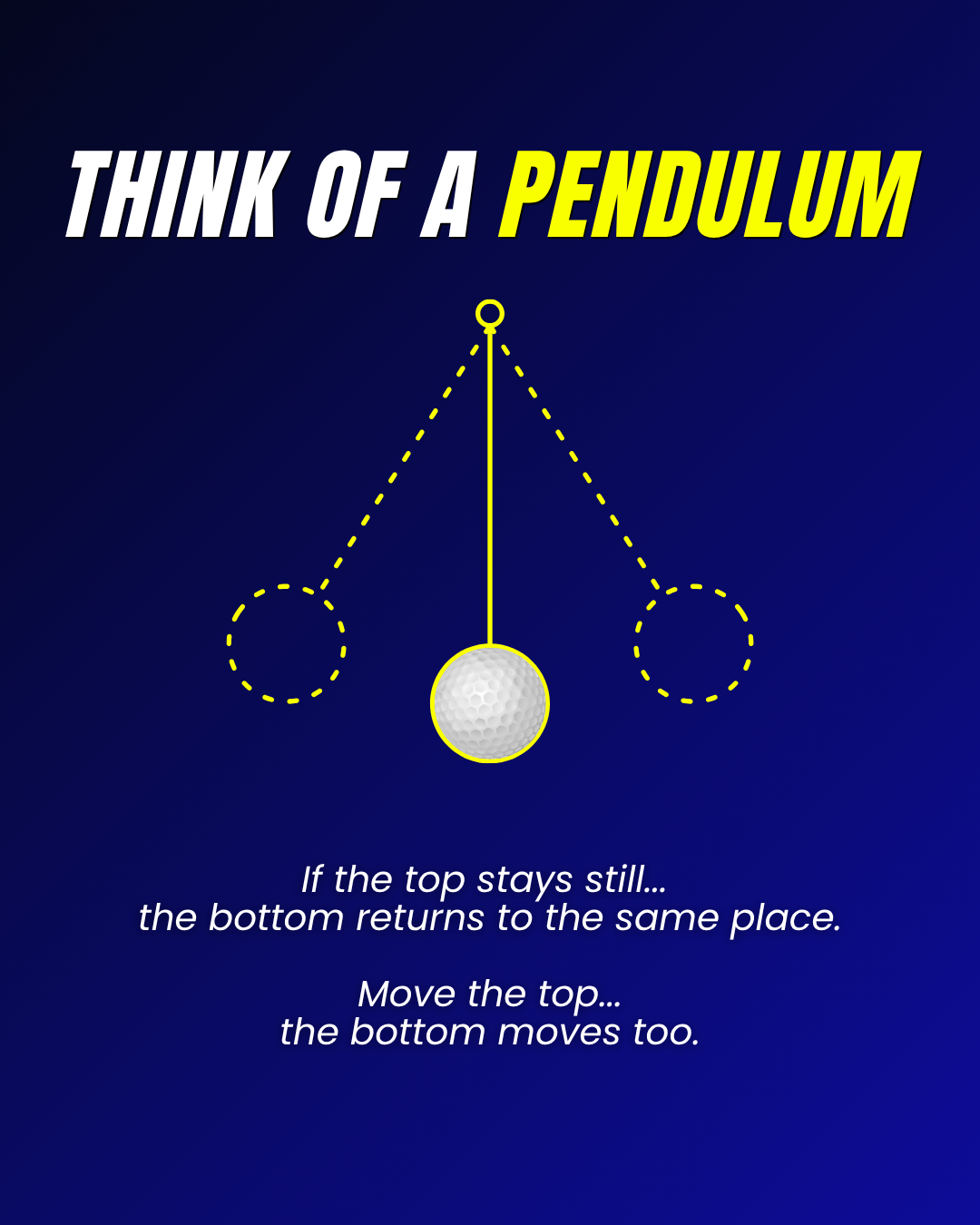
That's one reason you can hit one shot fat and another thin or topped.
There's another problem as well.
If you're further back on one swing, you may deliver more loft. If you're further in front on another, you may deliver less. Even with similar contact, you can end up with completely different distances because the launch and spin can change.
Watch me explain this: 1:14
So the problem isn't necessarily just striking the ball.
You can also struggle to predict how far you're going to hit it.
The Drill: Feet Together, Right Foot Back
Here's the drill I want you to try.
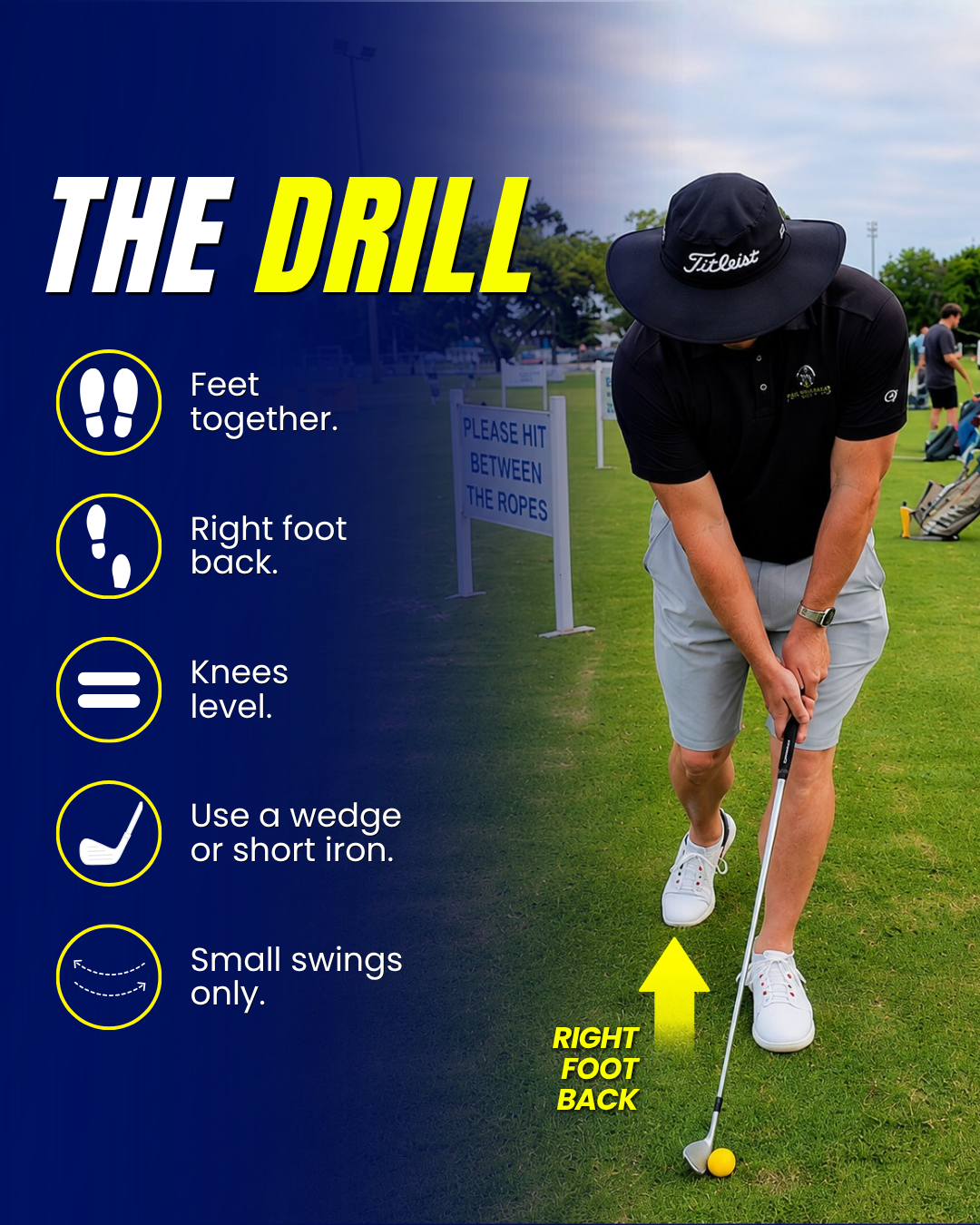
Start with your feet together.
Use a wedge or short iron, then put your right foot back. Keep your knees level and hit shots from this narrow position.
The purpose isn't to hit full golf shots.
I'm getting you to learn how to hit the ball while controlling your balance and developing the turning movement in your body.
One useful thing about this drill is that you can see where you're hitting the ground and start to develop a better awareness of your contact.
What Am I Trying to Change?
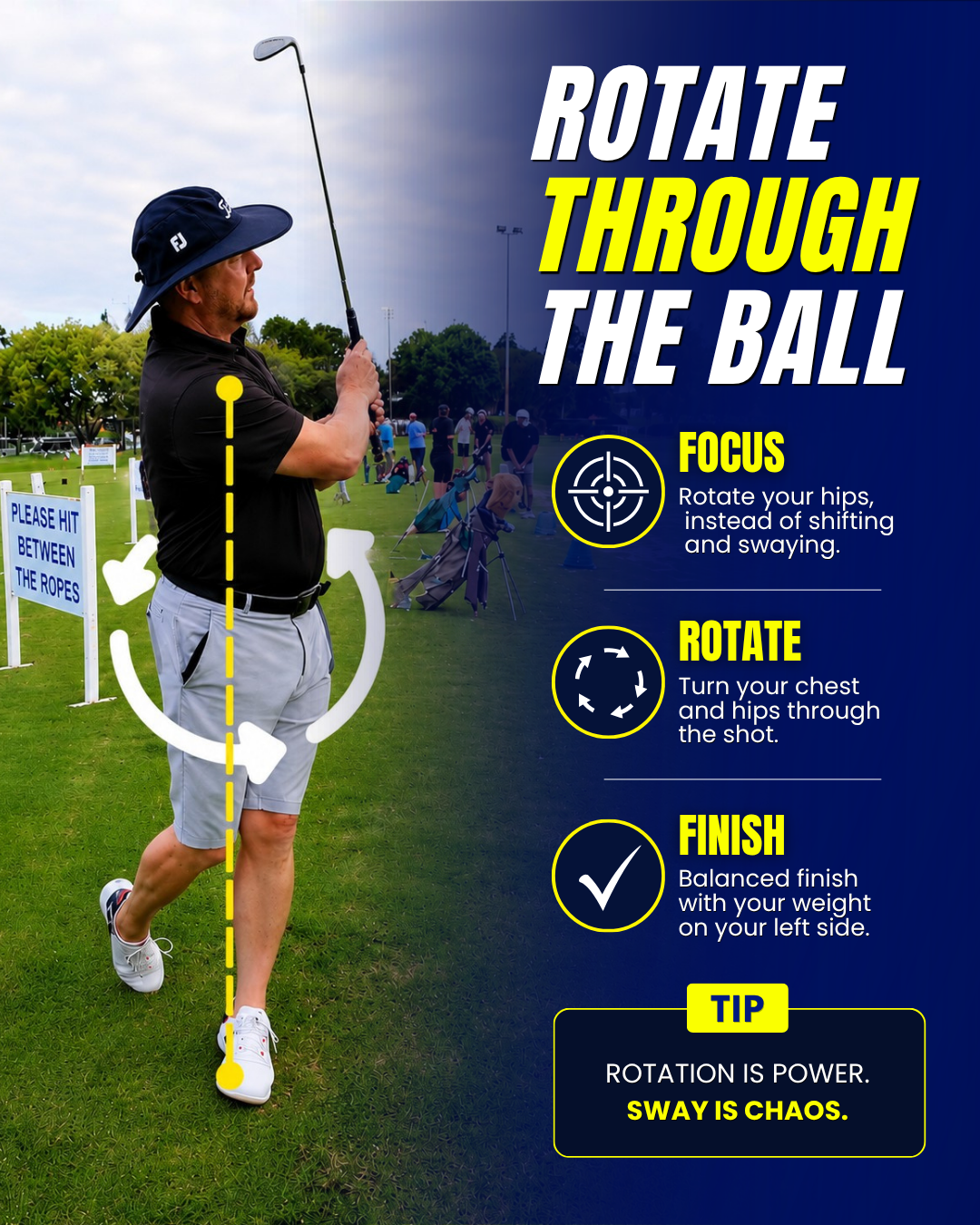
When you do the drill, I'm not looking for excessive sideways movement through your hips.
Instead, I want you to promote rotation of the hips.
Because your stance is narrow, the drill also challenges your balance.
That's intentional.
If you're struggling with balance, I want you to keep the stance really narrow because I don't want you to be able to simply move sideways. I want you to feel the rotational movement the drill is designed to encourage.
What If You Have a Tight Left Hip?
If you've got a tight left hip, you can flare your foot out slightly.
You don't have to keep your foot pointing completely straight ahead. A small amount of flare can help you make the movement.
Watch me explain this adjustment: 1:58
The important thing is that you don't lose the purpose of the drill.
I'm still getting you to develop the turning and rotation rather than the sideways movement.
Don't Expect This to Feel Easy
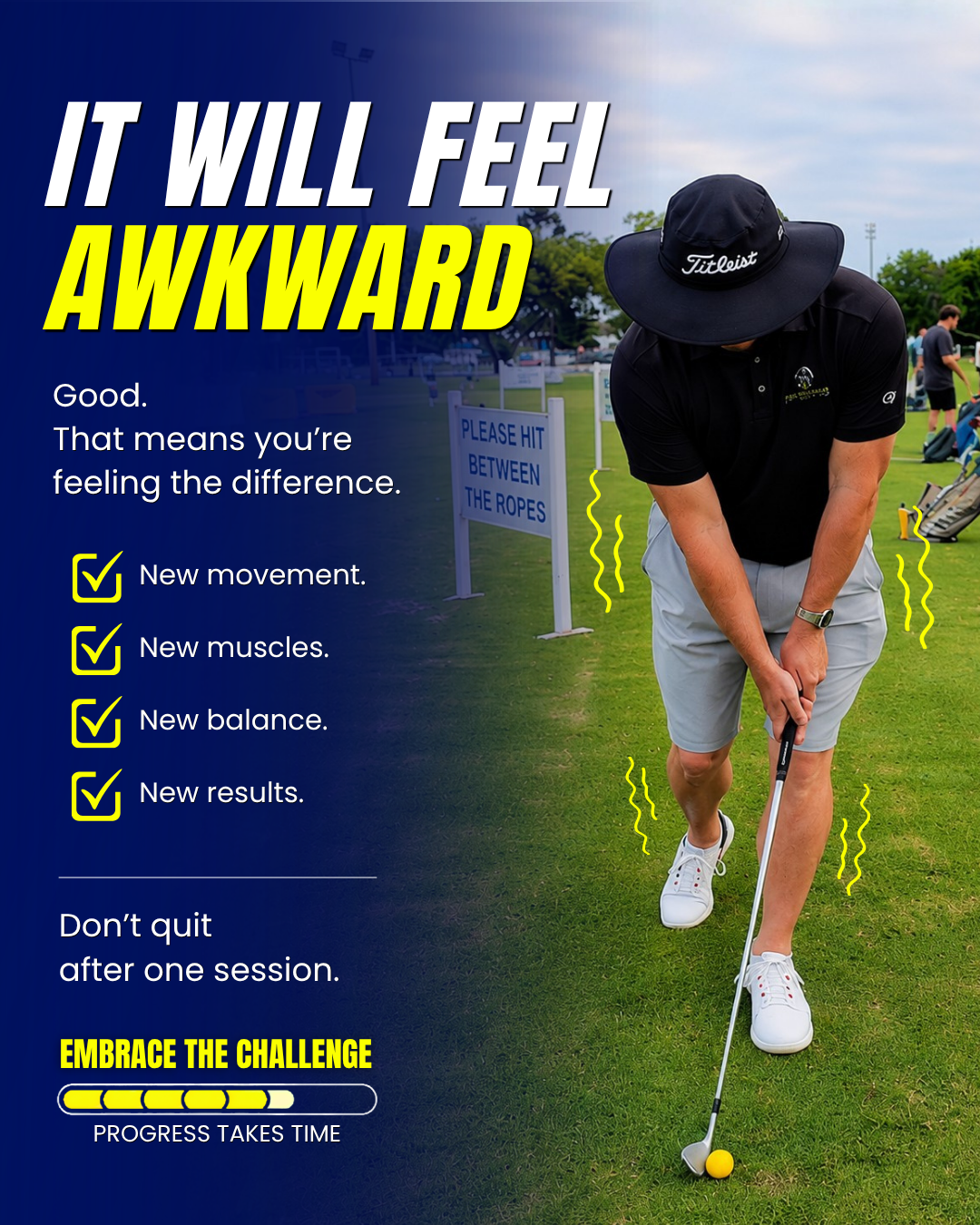
If you're someone who sways, this drill is going to feel quite uncoordinated at first.
That's part of the challenge.
I want you to embrace the challenge and work through it rather than immediately making the exercise easier.
My goal is to get you doing enough of the movement that eventually you don't have to consciously think about it.
And that's important because you can't simply think your way into a new movement pattern.
You've got to give your body time to change and develop the muscles involved in the new movement.
How Long Will It Take?
Don't expect this to be fixed after one bucket of balls.
I'm talking about a weeks, months and potentially years-long process of doing lots of repetitions.
Watch me explain the process: 2:54
That's because you're trying to develop a movement pattern rather than simply remember another swing thought.
I want the turning motion to become increasingly natural so you don't have to stand over the ball thinking about it.
What Should Improve?
As you develop the movement, I'm looking for you to start getting better contact.
I also want you to improve the shaft position and spin rate so you can judge distances on your short irons and wedges more effectively.
Watch me explain the results: 3:01
That's a big part of good iron play.
I don't just want you to hit one good strike.
I want you to become more predictable with your contact and distance.
The Simple Version
Here's the drill in its simplest form:
Feet together → right foot back → wedge or short iron → hit shots → focus on turning rather than swaying.
These are not full swings.
I'm simply getting you used to turning and rotating your body while improving your balance.
One important point
Fat, thin and topped shots can have different causes, so I don't want you to automatically assume that swaying is your problem.
This drill is specifically for the golfer where excessive swaying has been identified as an issue.
But if that is you, this is a simple drill I can use to help you start developing a better movement pattern.
Watch My Full Explanation
Want to see exactly how I want you to do the drill?
Watch my original video:
Stop Hitting Fat and Thin Shots With This Easy Trick
-
The Gold Coast offers a range of options including Emerald Lakes, Palm Meadows, Hope Island, Southport, and Coolangatta-Tweed. Paul Williamson provides personalised on-course coaching that goes beyond traditional lessons, covering skills, strategy, and mental game in real playing conditions.
-
One-hour lessons provide quick tips but rarely translate under course conditions. Paul’s on-course coaching uses 9-hole assessments to build a tailored plan that actually drops strokes from your scorecard.
-
Paul Williamson, a PGA Professional with 30+ years’ experience, provides personalised on-course coaching at courses around Carrara, Hope Island, Robina, Southport, Coolangatta-Tweed, and the broader Gold Coast.
